
 Back
BackAgropalma seeks to strengthen its environmental leadership with a forest conservation model in the Amazon
Company reports results from two decades of biodiversity protection and stands out as a leader in integrating sustainable production and environmental preservation
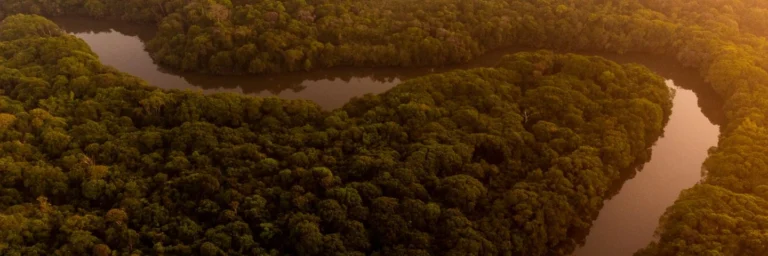


At a time when the eyes of the world are on Belém, host city of COP30, Agropalma seizes Amazon Day to reaffirm its commitment to rainforest conservation. With over 20 years of social and environmental engagement in the region, the Brazilian company, a global benchmark in sustainable palm oil production, reports solid results that put its business model at the forefront of climate discussions.
According to recent data from INPE, deforestation in the Amazon increased by 8.4% between August 2024 and June 2025, driven mainly by fires. The progress of degradation brings the forest closer to the so-called “point of no return” — a stage at which ecosystems can no longer regenerate, with irreversible impacts on the global climate.
Production with preservation: the Agropalma model
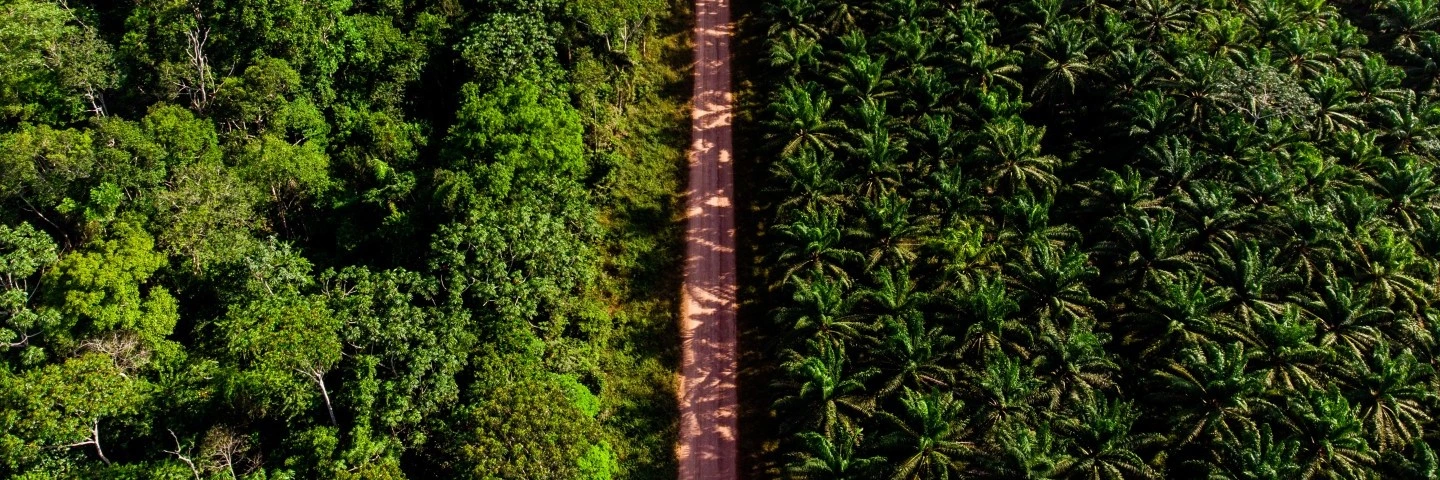
Since 2002, Agropalma has adopted an environmental offsetting policy that protects 1.6 hectares of native forest for every hectare of palm planted. The result is the conservation of 64,000 hectares of forest, equivalent to 60% of the company’s total area, located in Centro de Endemismo Belém (CEB – Belém Endemism Center) in Pará — one of the most biodiverse regions on the planet.
In addition to prohibiting hunting and fishing in protected areas, the perennial cultivation of palm trees helps minimize the edge effect, protecting forests from fire, wind, and sun exposure. The company invests around R$ 2 million per year in its forest protection and biodiversity monitoring programs, with a permanent team of forest rangers and a security system aimed at preventing invasions and illegal logging.
Biodiversity monitoring: science as an ally
In partnership with Conservation International (CI), Agropalma has been monitoring more than 1,000 species of Amazonian fauna for 18 years, including birds, mammals, reptiles, amphibians, and fish. The results are impressive:
40 endangered species found in the region, such as the Cebus kaapori monkey and the jaguar
400 species of birds, 27 of which are endangered
60 species of mammals, 11 of which are endangered
Monitoring takes place via 18 forest trails, using cameras and direct observation. Data is used to produce technical reports that serve as bioindicators of the ecological health of protected areas. The company’s goal is to expand monitoring to 24 new areas on partner farms.
Alliances for conservation
Agropalma also supports the Amazon Tapir Program, run by the Instituto de Pesquisas Ecológicas (IPÊ – Institute for Ecological Research), which studies South America’s largest land mammal – the tapir – in its reserves. Considered vulnerable to extinction, the tapir is essential for seed dispersal and maintaining biodiversity.
Another strategic partner is the Programa de Pesquisa em Biodiversidade da Amazônia Oriental (PPBio-AmOr – Eastern Amazon Biodiversity Research Program), coordinated by UFPA and the University of Bristol. The company provides logistical support for researchers to study wildlife behavior and the effects of conservation on the climate.
“This union between science and industry is critical for addressing social and environmental challenges and generating knowledge about biodiversity,” says Filipe França, professor at UFPA and the University of Bristol.
Bioeconomy and COP30: vision of future
With COP30 approaching, Agropalma is positioned as an active player in debates on bioeconomy and conservation. For Tulio Dias Brito, the company’s Sustainability Officer, sustainable development is not a contradiction – it is a convergence.
“The forest does not impose limits, it offers opportunities. Private sector initiatives need to be at the forefront of the solution. Our role is to show that economic development and standing forests are the only sustainable path.”
In a climate emergency scenario, Agropalma shows that it is possible to reconcile agricultural production with environmental conservation. With continuous actions, measurable results, and scientific partnerships, the company stands out as an example of how the private sector can lead solutions to the challenges of the Amazon – and the planet.
To learn more about the company’s environmental initiatives, GZM spoke with two Agropalma leaders, Tulio Dias Brito, Sustainability Officer, and Edison Delboni, Industrial Officer at Agropalma’s refineries. Check it out:
GZM: Agropalma has set a goal of reducing its operational emissions by 50% by 2030. What are the main challenges to achieving this goal?
Tulio Dias Brito: One of the main challenges in achieving this goal is reducing methane (CH₄) emissions generated in the treatment of effluents from palm oil production, known as POME (Palm Oil Mill Effluent).
This challenge has already been mapped out, and we are implementing a biocomposting project in Tailândia (PA) where we process our fruits. The new plant will transform the solid waste resulting from palm oil extraction into high-quality organic fertilizer, using POME to enrich the material.
The contribution to reducing emissions is due to the fact that, by channeling POME into composting – an aerobic process – methane generation is avoided. Methane is a gas that is much more polluting than CO₂, which is emitted in smaller quantities in this case. The start of this operation will be a key step towards making progress on our decarbonization goal and reinforcing our commitment to environmental preservation.
GZM: Since 2017, the company has reduced its GHG emissions by 24%. What were the most effective actions taken to achieve this milestone?
Tulio Dias Brito: This achievement is the result of continuous effort and a sustainability strategy that is fully integrated into our operations.
Based on the analysis of our emissions inventory – conducted in accordance with the GHG Protocol methodology – we have defined priority areas for action, which include: Reducing the use of chemical fertilizers and fossil fuels, both in the field and in industries; Decreasing the generation of POME (Palm Oil Mill Effluent) and improving its management; Sustaining Zero Deforestation commitments, ensuring the preservation of areas of high conservation value; Using electricity from the grid, taking advantage of Brazil’s energy matrix, which is mostly renewable; Adopting procedures and good operational practices throughout the production chain.
Agricultural production stood out as the most favorable area for implementing these measures, resulting in concrete gains in reducing emissions associated with farming. This combination of actions, coupled with continuous monitoring, has been essential in moving us toward our decarbonization goals.
GZM: How does the adoption of CNG-powered trucks contribute to the company’s sustainability strategy?
Tulio Dias Brito: Sustainability and tackling climate change are part of Agropalma’s strategy, and this vision led us to develop a pioneering green logistics project, which includes the adoption of CNG-powered trucks.
According to estimates, when powered by gas, this cargo vehicle contributes to a 21% reduction in CO2 emissions into the atmosphere. This is a highly significant amount and, when added to the mitigation of other gases through other actions implemented by the company, such as the adoption of photovoltaic energy and the use of biomass boilers, among others, this impact becomes even more significant.
GZM: The company encourages its partner carriers to use Euro 6 standard trucks. What are the benefits of this measure for the environment and logistics efficiency?
Tulio Dias Brito: Vehicles that comply with Euro 6 standard contribute to significantly lower emissions of pollutants into the atmosphere, directly helping to prevent the worsening of greenhouse effect and the climate change.
I can honestly say that, at Agropalma, adopting the green logistics project and using natural gas-powered trucks has not only resulted in efficiency in the logistics process, but has also reduced transportation costs.
For comparison purposes, according to the company’s own calculations, the cost of gas transportation breaks even with diesel after the ninth trip made by the gas-powered truck – a saving of around R$ 220,000 per year.
GZM: Agropalma has been maintaining a zero-deforestation policy for over 20 years and protects 64,000 hectares of Amazon rainforest. How does this approach impact the palm oil sector and local biodiversity?
Tulio Dias Brito: When we talk about a zero-deforestation policy, the impact is unique and positive both for the palm oil market and for local biodiversity.
In Pará, Agropalma is located in a region of the Amazon known as the Belém Endemism Center (CEB), where biodiversity is under serious threat. The existence of a 64,000-hectare Amazon rainforest reserve in this region contributes to the conservation of fauna and flora in this environment, which, despite being threatened, stands out for its diversity.
And this impact is visible: the presence and permanence of around 40 endangered species have already been recorded, such as the Ceebus kaapori monkey, the ararajuba bird, and the jaguar. This indicates that the protected area fulfills its purpose of providing a safe habitat for hundreds of species.
This environmental return has been so significant that we have extended our conservation efforts beyond the Amazon, around our Limeira refinery. As part of the unit’s development plan, Agropalma restored and reforested 2.5 hectares of Atlantic Forest adjacent to the company’s extension to also help preserve the biodiversity of this area. Several species such as foxes, pumas, toucans, porcupines, and capybaras have been recorded in the area.
From the palm oil sector’s point of view, this policy has pushed the company to improve cultivation techniques so that it can make the most of the production capacity of areas that have already been cleared for cultivation.
Best Management Practices (BMP) were adopted in part of the plantation, which basically consist of combining productivity strategies – such as management focused on yield gains, good soil cover (which also reduces the use of herbicides in total areas), adequate nutrition, and pruning at the right times – with yield capture, a process that involves interventions to reduce losses during harvest.
As a result, compared to areas where BMPs were not applied, the section that received best practices achieved gains in efficiency, resource utilization, and expansion of production per hectare—an indication of increased efficiency and smart use of resources, preserving the environment at various stages of cultivation.
GZM: Replacing natural gas with biomass at the Limeira refinery has led to a significant reduction in CO2 emissions. Are there plans to expand this initiative to other units?
Edison Delboni: Replacing natural gas with biomass in Limeira was indeed a milestone in our decarbonization journey, and we are very pleased with the significant reduction in CO2 emissions. This project is not an isolated case, but part of a larger strategy.
Expanding the use of bioenergy is a priority for Agropalma, and our goal is to bring this and other clean energy initiatives to our entire production chain and all our units. We are actively studying the best ways to replicate this success.
GZM: How has Agropalma integrated bioenergy into its industrial operations, and what are the impacts of this choice for the sector?
Edison Delboni: Agropalma has been seriously dedicated and committed to its energy transition journey, which includes the use of clean and renewable energy in its industrial operations.
In the palm oil refining and processing process, for example, one of the most important pieces of equipment is the boiler, which generates the steam used to power other machines.
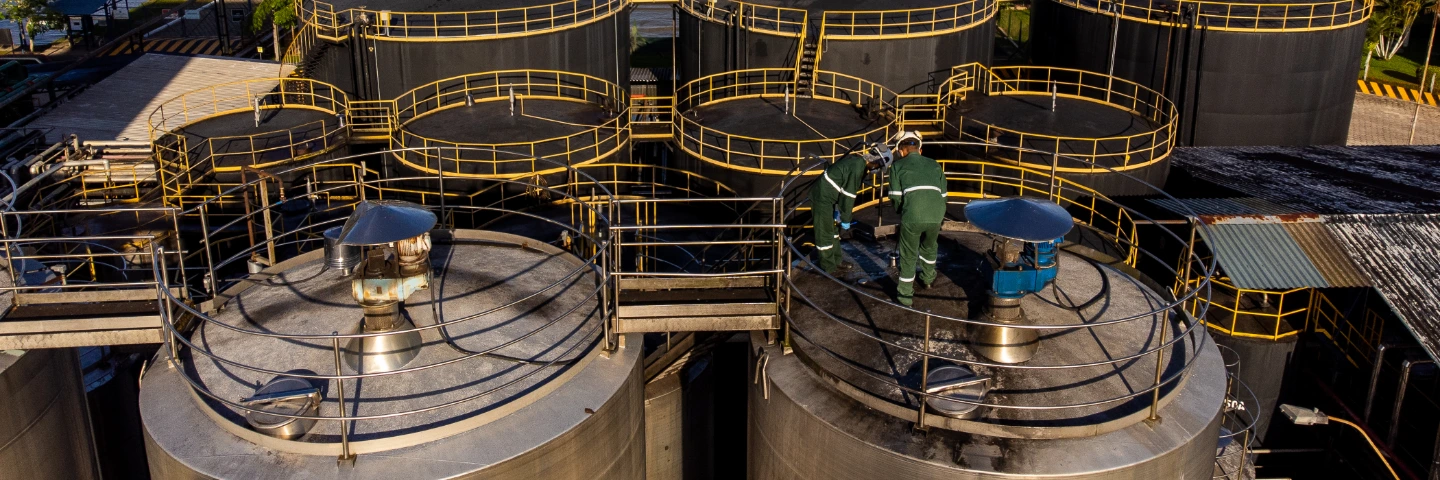
At Limeira, the boiler used to be fueled by natural gas, but it was replaced by wood chips and other types of biomass that are more environmentally friendly and economical. According to our estimates, by replacing natural gas with biomass, we have reduced emissions by more than 13,000 tons of CO2, which is equivalent to planting 91,000 trees annually.
The use of the biomass boiler also promoted sustainability in yet another way, through the use of eucalyptus forests planted specifically for this purpose, which, while growing, contribute to carbon sequestration from the atmosphere.
The choice of bioenergy, especially in industrial production, has only had positive impacts for Agropalma. In addition to reducing the presence of greenhouse gases in the atmosphere, the method proved to be more cost-effective and efficient, as there was no drop in the generation of 15 tons of steam per hour. This demonstrates to the entire market that production can be maintained in a more sustainable and economically feasible way.
Source: Gazeta Mercantil (09/05/2025)